PAIN AT THE
TIME OF KILLING
PROTECT CRUSTACEANS AT TIME OF KILLING
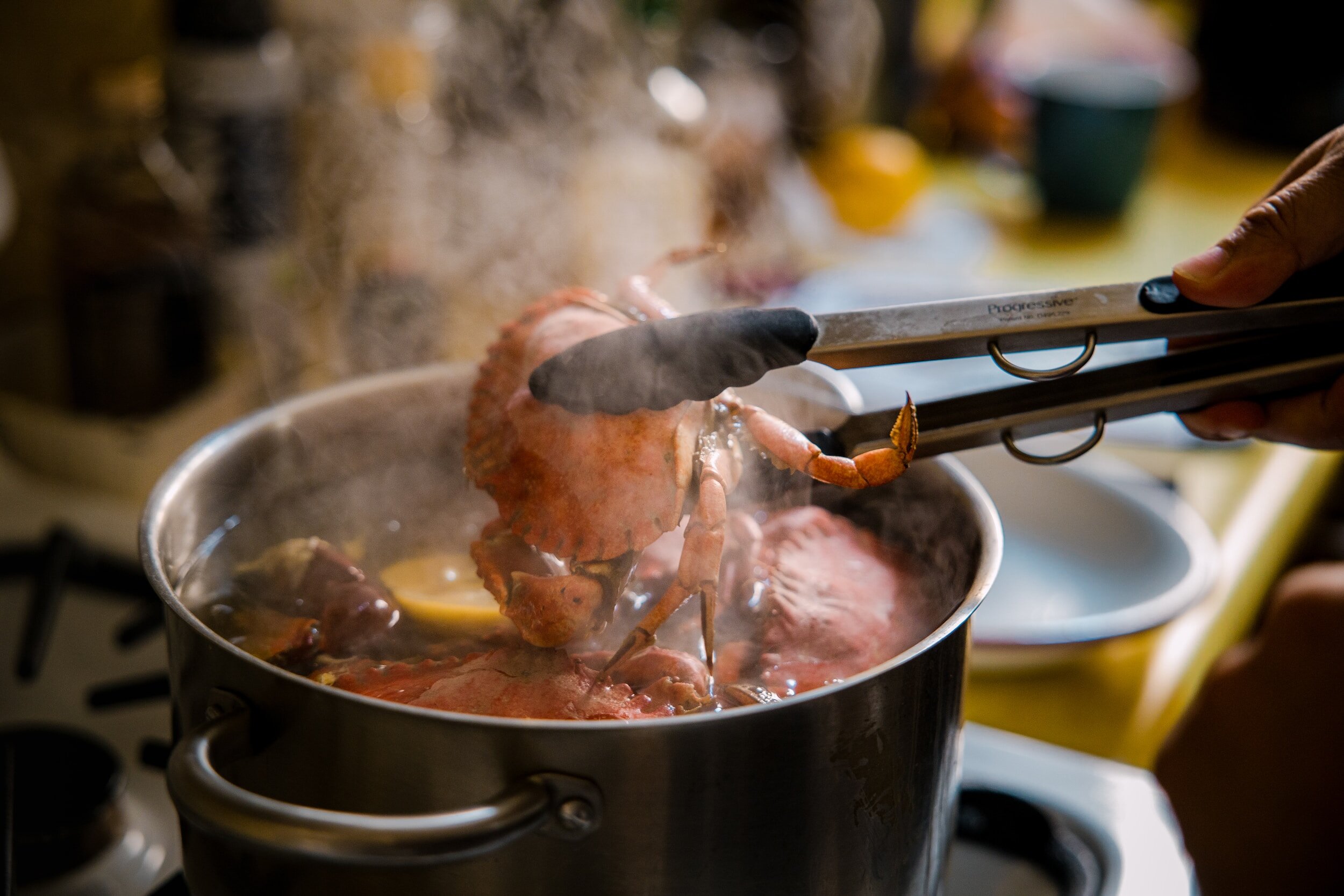
Decapod crustaceans - such as lobsters and crabs - are sentient invertebrate animals capable of experiencing emotions, pain and suffering. Yet these sensitive animals regularly experience prolonged and painful deaths in the UK, such as being boiled alive whilst completely conscious, which can take many agonising minutes to die.
At The Animal Law Foundation, we believe that these prolonged and painful deaths are contrary to the law. We outlined this in a legal letter to the English government, calling on them to immediately enforce the Welfare of Animals at the Time of Killing Regulations 2015 (WATOK or Welfare at the Time of Killing Regulations 2015) for decapod crustaceans, along with publishing specific guidance that outlines legally compliant higher welfare killing methods for decapod crustaceans.
This is all in the context of our 2023 YouGov poll which unveiled that 61% of the British public think it is unacceptable to cook decapod crustaceans (such as crabs and lobsters) by boiling them while still alive. This increased to 78% of Brits when they were asked to consider if the decapod crustaceans could feel pain during the process - which scientific consensus confirms they do. You can view the results in full here.
In December 2025, the government agreed with us that boiling decapod crustaceans alive is an unacceptable killing method under the current law in England.
Wales and Northern Ireland have equivalent laws to England – the Welfare of Animals at the Time of Killing (Wales) Regulations 2014 and the Welfare of Animals at the Time of Killing Regulations (Northern Ireland) 2014 respectively – which make it an offence to cause decapod crustaceans avoidable suffering when killing them.
In July 2026, we wrote to the Welsh and Northern Irish governments on behalf of a coalition of co-signatories, calling on them to acknowledge that boiling crabs and lobsters alive is unlawful.

LEGAL PROTECTIONS FOR CRUSTACEANS IN ENGLAND, WALES AND NORTHERN IRELAND
The Welfare of Animals at the Time of Killing Regulations 2015 (and its equivalents in Wales and Northern Ireland) makes it an offence to restrain, stun or kill applicable animals in a way that may:
a) Cause any avoidable pain, distress or suffering to that animal; or
b) Permit that animal to sustain any avoidable pain, distress or suffering.
Moreover, the person killing these animals must have the knowledge and skill necessary to perform these operations humanely and efficiently.
Considerable scientific research, consolidated in the government commissioned London School of Economics (LSE) Review of the Evidence of Sentience in Cephalopod Molluscs and Decapod Crustaceans, highlights the advanced nervous systems of crustaceans, their sentience and their need for legal protection. These nervous systems enable them to feel pain, distress, and fear – sensations that are heightened when subjected to the agonising process of being boiled alive. Decapods crustaceans are recognised as sentient under the Animal Welfare (Sentience) Act 2022.
Alternative killing methods exist, which would avoid a significant amount of the suffering. Lobsters and other decapod crustaceans can be electronically stunned and cut in a way to mechanically destroy their nervous system before being killed or cooked.
Relevant guidance would help inform the industry on legally compliant and less painf killing methods for these deserving animals.
VICTORY
Following years of hard work…
The English government and the Welsh Government have accepted our interpretation of the law and now recognise that boiling lobsters alive is illegal in England and Wales. We are now calling on the Northern Irish government to do the same.
"We are overjoyed that lobsters and crabs will now get the legal protection they are entitled to and will no longer suffer as a result, as every animal deserves"
"Challenging the government over this issue has been particularly close to my heart, due to the extreme suffering boiling alive involves and the fact that it represents a clear example of the law on paper saying one thing, but the reality on the ground not reflecting that law. This discrepancy between the law and practice is sadly common across the board for animals under the law. However, we are delighted that the government has risen to the occasion and is taking its regulatory responsibilities seriously, which will prevent widespread illegality by the industry.”

Edie Bowles, Founder and Executive Director at The Animal Law Foundation
We are now waiting for the English government and Welsh Government to publish official guidance that makes it clear to the industry and consumers that live boiling is an unacceptable and illegal killing method.
HELP US KEEP UP THE PRESSURE
You can engage with your local Member of the Northern Irish government, urging them to acknowledge boiling crabs and lobsters alive is illegal. Download the letter below, that you can either post or email to your local MLA.
DONATE TO HELP CRUSTACEANS TODAY
Help us keep up the pressure to ensure decapod crustaceans receive the protections they are legally entitled to.